
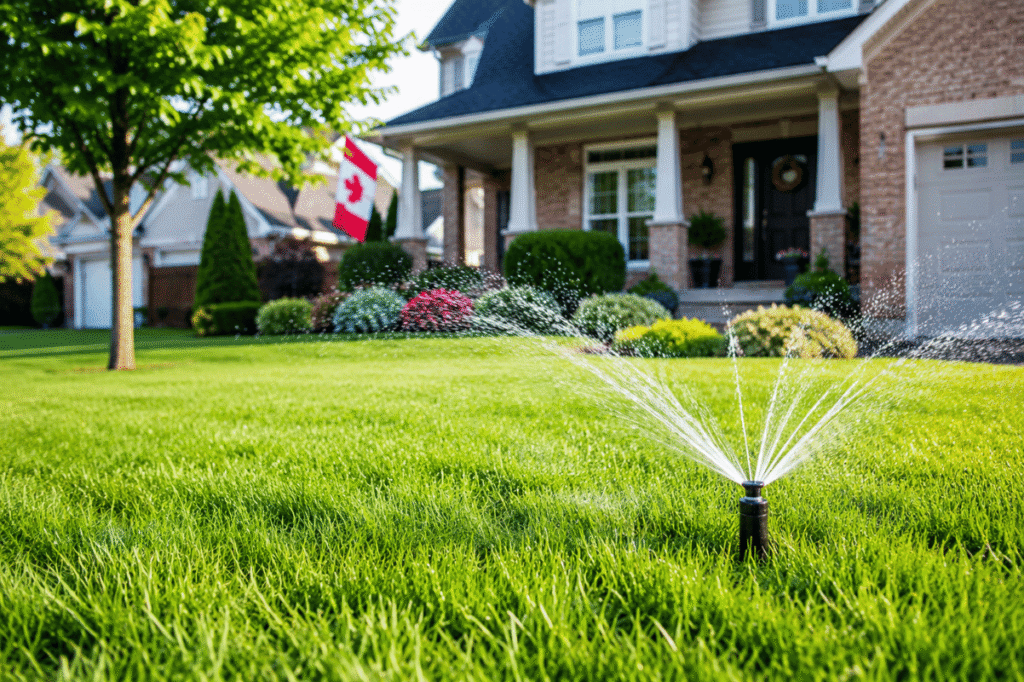
A lush, green lawn is a source of pride for many homeowners across Waterloo Region. However, seasonal watering restrictions often leave residents wondering whether it is still possible to maintain healthy grass without using excessive amounts of water. The good news is that you can keep your lawn looking green and healthy while following local watering regulations. It simply requires a smarter approach to lawn care.
Understanding Waterloo Region’s Watering Restrictions
Watering restrictions are designed to reduce pressure on municipal water systems during periods of high demand, particularly in the warmer months. These rules typically limit when and how often residents can water their lawns. While the restrictions may seem challenging, they encourage more efficient water use and promote sustainable landscaping practices.
A healthy lawn does not necessarily need daily watering. In fact, overwatering can weaken grass roots and make lawns more vulnerable to disease, pests, and drought stress.
Water Deeply and Less Frequently
One of the most effective ways to maintain a green lawn during watering restrictions is to water deeply rather than frequently. Deep watering encourages grass roots to grow further into the soil, allowing them to access moisture that remains below the surface.
Instead of giving your lawn a light watering every day, focus on providing enough water during permitted watering times to penetrate several inches into the soil. This creates stronger, more drought-resistant turf.
Mow at the Right Height
Many homeowners cut their grass too short, especially during summer. Short grass dries out more quickly and struggles to retain moisture. Understanding how mowing habits affect your lawn can help you maintain healthier grass throughout the growing season.
During periods of watering restrictions, raise your mower blade slightly. Longer grass blades provide shade for the soil, reduce evaporation, and help the lawn stay greener for longer. Leaving grass clippings on the lawn after mowing can also return valuable nutrients and moisture to the soil. It is also important to know whether you should mow grass when it is wet, as poor mowing conditions can damage turf and create an uneven finish.
Improve Soil Health
Healthy soil plays a major role in water retention. Lawns with nutrient-rich soil absorb and hold moisture more effectively than compacted or poor-quality soil.
Aeration, top dressing, and regular fertilization can improve soil structure and help your lawn withstand dry conditions. Vehicle traffic can also contribute to soil compaction, so homeowners should understand how parking a car on the lawn can damage landscaping.
Many homeowners choose to work with a professional commercial lawn maintenance service in Kitchener to assess soil conditions and develop a lawn care strategy that supports long-term health while minimizing water usage.
Water at the Best Time of Day
If watering is permitted, timing matters. Early morning is typically the best time to water your lawn. Cooler temperatures and lower wind levels reduce evaporation, allowing more water to reach the roots.
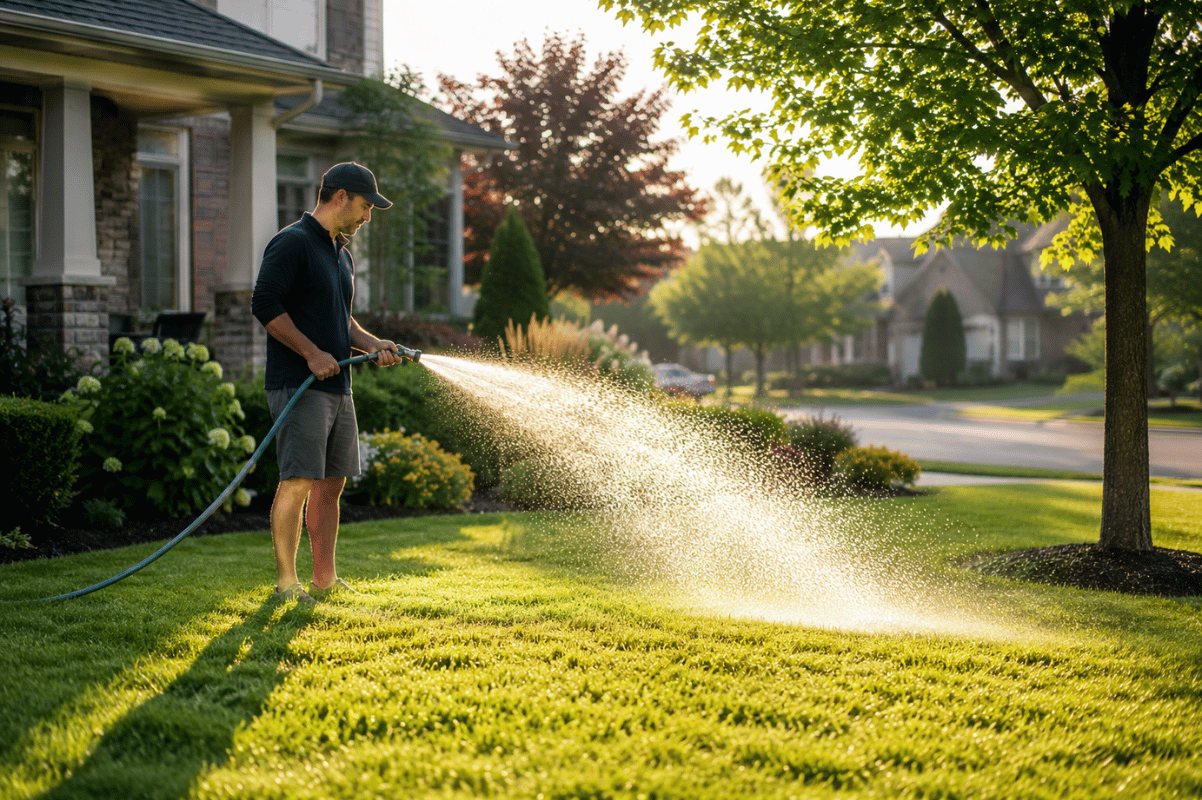
Avoid watering during the heat of the day, as much of the moisture can evaporate before it benefits the grass. Evening watering can sometimes increase the risk of fungal diseases if the lawn remains damp overnight.
Consider Drought-Tolerant Lawn Practices
Modern lawn care focuses on resilience rather than excessive watering. Consider overseeding with drought-tolerant grass varieties that perform well in Southern Ontario conditions. These grasses require less water and remain healthier during dry periods.
Applying mulch around garden beds and trees can also reduce competition for moisture, helping your entire landscape stay healthier throughout the summer.
Watch for Signs of Stress
Not all brown patches indicate a dying lawn. Grass naturally enters a dormant state during extended dry periods. Dormant grass may appear brown but often recovers once adequate moisture returns.
Look for signs such as footprints remaining visible after walking across the lawn or blades that fold inward. These indicators suggest the lawn may need water during the next permitted watering period.
Focus on Long-Term Lawn Health
Maintaining a green lawn during watering restrictions is less about increasing water use and more about creating the right growing conditions. Proper mowing, healthy soil, efficient watering, and drought-resistant practices can significantly improve your lawn’s appearance while remaining compliant with local regulations.

Homeowners who invest in sustainable lawn care techniques often find that their lawns require less maintenance and remain healthier throughout the growing season. A broader range of property care services can also help address seasonal maintenance needs beyond regular lawn watering.
Yes, you can keep a green lawn during Waterloo Region’s watering restrictions. Success comes from using water wisely, improving soil health, and adopting lawn care practices that promote deeper roots and stronger turf. By focusing on efficiency rather than volume, you can enjoy an attractive lawn while supporting responsible water conservation efforts in your community.
