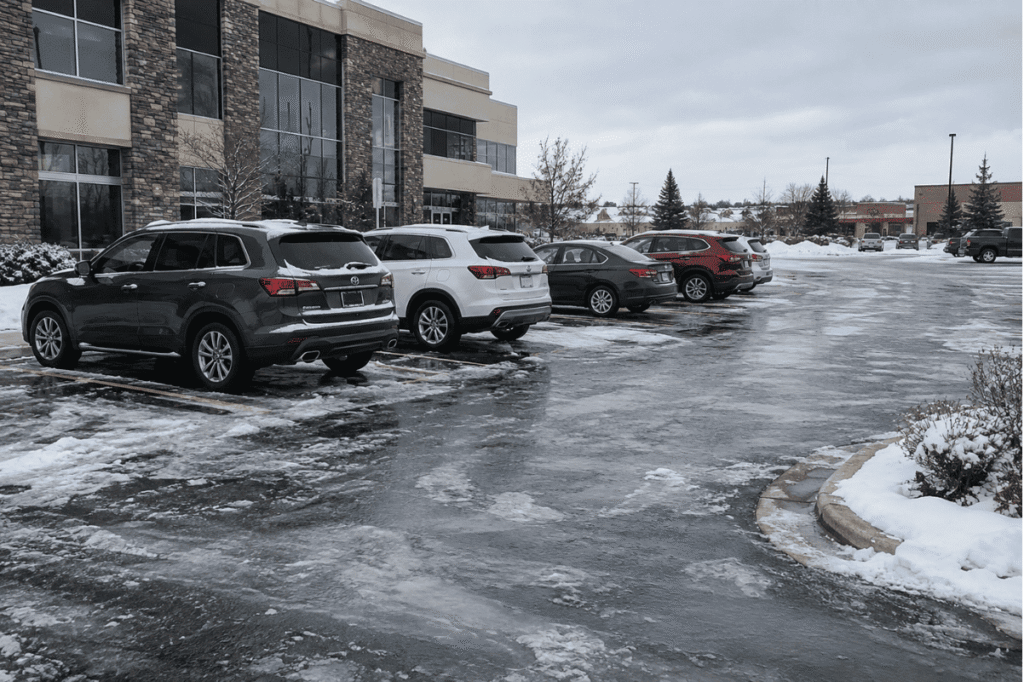
Commercial properties can become icy even when no new snow has fallen. One of the main reasons is the freeze-thaw cycle, a common winter condition in Canada where temperatures move above and below freezing over a short period.During the warmer part of the day, existing snow and ice begin to melt. The resulting water can move across sidewalks, parking lots, loading areas, and entrances. When temperatures drop again, that water can refreeze and create new patches of ice.For commercial property owners and managers, understanding this cycle is important because winter hazards do not always begin with a fresh snowfall.
What Is a Freeze-Thaw Cycle?
A freeze-thaw cycle happens when temperatures rise above 0°C and then fall below freezing again.When temperatures increase, accumulated snow and ice begin to melt. Water may then flow away from snowbanks, roofs, landscaped areas, and other parts of the property.If the temperature falls below freezing before that water drains or dries, it can turn back into ice.This process may repeat several times during the winter. As a result, a property that looked clear in the afternoon can develop slippery areas later that evening or overnight.
How Can Ice Form Without New Snow?
Fresh snowfall is only one source of winter ice.Existing snow around a commercial property can continue to produce meltwater long after the original snowfall has ended. Sunlight, warmer daytime temperatures, heated buildings, vehicle traffic, and roof runoff can all contribute to melting.Once the water reaches colder pavement or remains on the surface as temperatures fall, it can freeze again.This means property managers need to pay attention not only to snowfall forecasts, but also to temperature changes and water movement across the site.
Melting Snowbanks Can Create Runoff
Large snow piles are common around commercial parking lots and other cleared areas.When daytime temperatures rise, the outer layers of these snowbanks begin to melt. Water can then travel across nearby pavement, particularly if the ground slopes toward a driveway, walkway, parking space, or pedestrian route.Later in the day, temperatures may drop and the runoff can refreeze.The resulting ice may appear far from the original snow pile, making the source of the problem less obvious.Checking where snowbanks are positioned and where their meltwater is likely to travel can help identify recurring trouble spots.
Drainage Problems Can Make Refreezing Worse
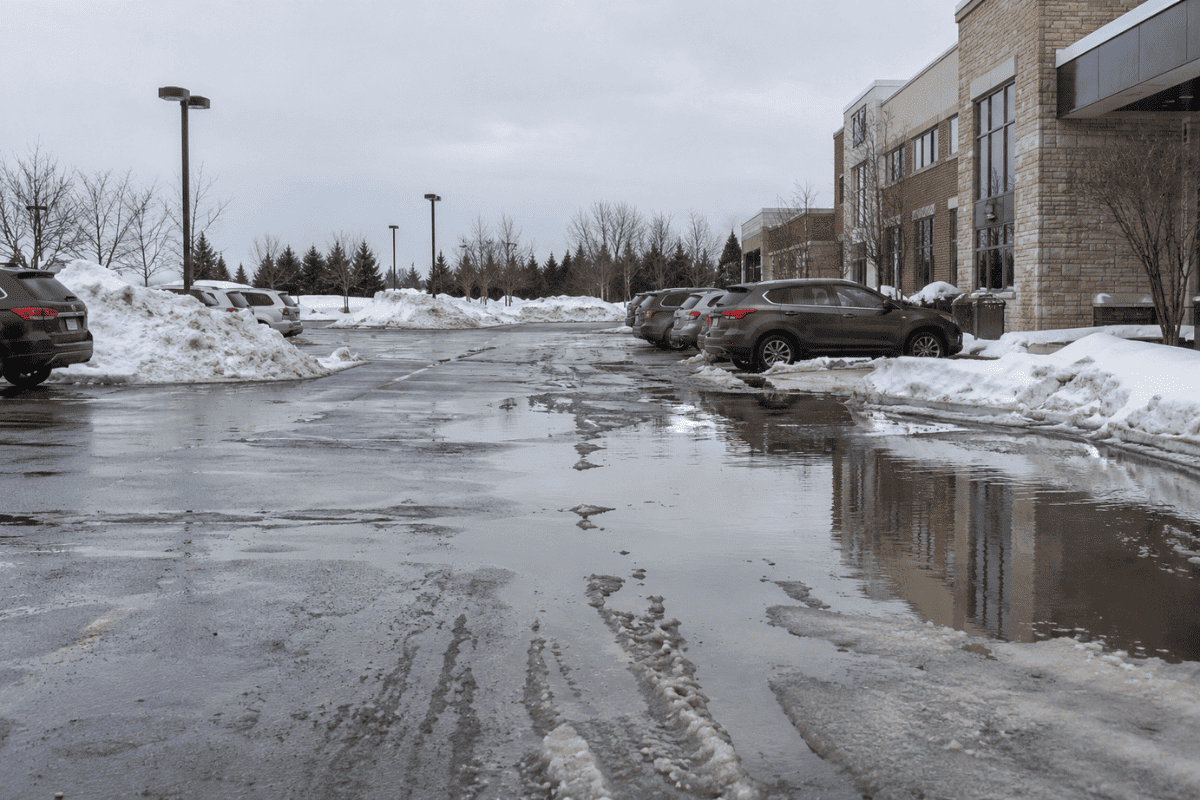
Proper drainage plays an important role in winter property maintenance.Low areas in parking lots and walkways can collect water instead of directing it toward an appropriate drainage point. Blocked drains, accumulated debris, uneven pavement, or poor grading can also slow water movement.Standing water has more time to freeze when temperatures fall.Property managers should pay particular attention to areas where puddles regularly form. During freeze-thaw conditions, these locations can become repeated sources of ice even when the rest of the property appears dry.
Roof Runoff and Downspouts Can Cause Hidden Ice Problems
Water from roofs is another common source of winter ice.Snow on a roof may begin melting during warmer daytime conditions. The water can move through gutters and downspouts before reaching the ground.If a downspout releases water onto or near a walkway, entrance, parking area, or ramp, the water may spread across the surface and freeze later.Property managers should inspect where downspouts discharge and determine whether water is being directed away from pedestrian and vehicle areas.Small drainage issues can become much more noticeable during repeated freeze-thaw cycles.
Pay Close Attention to High-Traffic Areas
Some areas of a commercial property require more frequent winter inspections than others.Entrances, sidewalks, accessibility ramps, parking lot crossings, loading zones, stairways, and frequently used pedestrian routes should receive particular attention.When arranging Snow removal in Kitchener, it is also useful to consider how the property will be monitored after the snow has already been cleared, especially when temperatures are expected to fluctuate.Removing snow is only one part of managing winter conditions. Meltwater and refreezing can continue creating problems after the original snow event has passed.
Shaded Areas May Stay Icy Longer
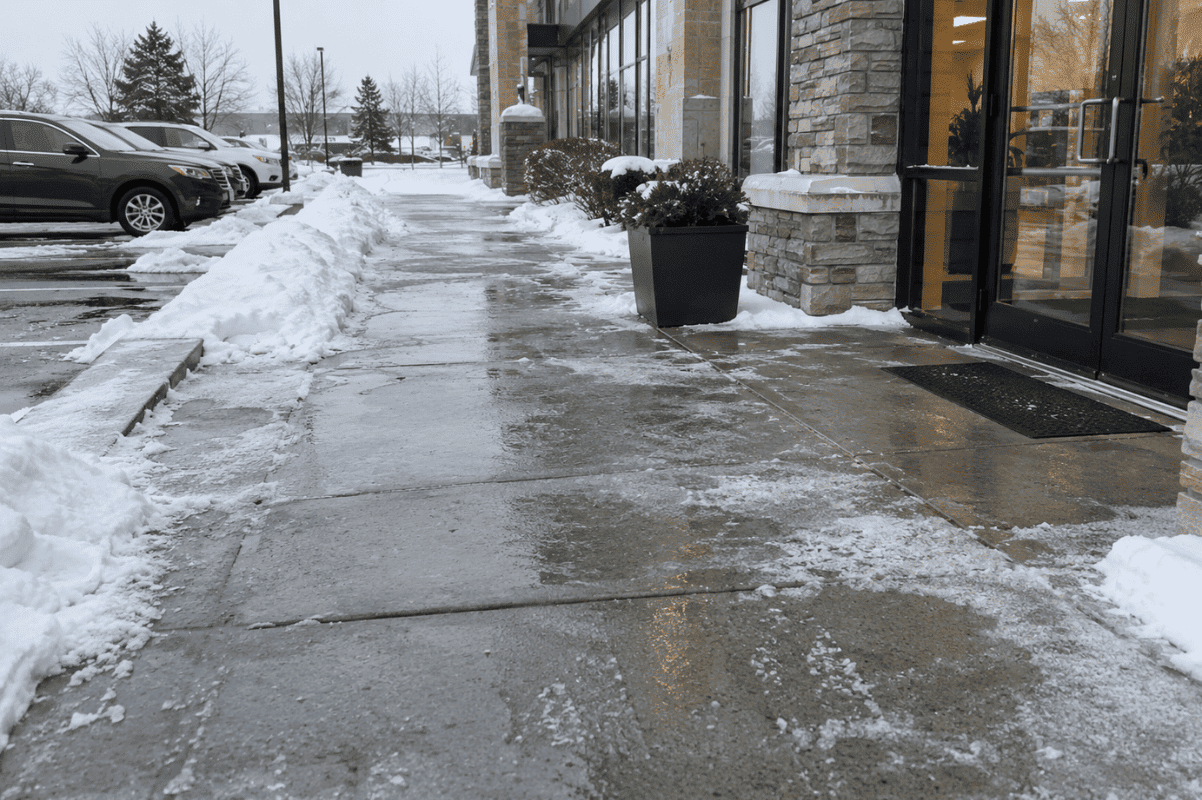
Sun exposure can make a significant difference to surface conditions.Pavement that receives direct sunlight may warm enough for ice to melt during the day. Areas beside tall buildings, fences, trees, or other structures may remain shaded and colder.Water that reaches these shaded areas can freeze more quickly or remain frozen for longer periods.This is why two sections of the same parking lot or sidewalk can have very different conditions at the same time.Property managers should learn which areas of their site receive limited winter sunlight and include them in routine inspections.
Watch for Water Moving Across Pavement
One of the most useful signs of a future ice problem is visible water movement.
During warmer daytime temperatures, inspect the property for water travelling from:
- Snowbanks
- Roof drainage systems
- Landscaped areas
- Parking lot edges
- Building entrances
- Sloped pavement
- Areas where snow has recently been cleared
Following the path of the water can help determine where it is likely to collect or freeze once temperatures fall.A drainage issue may be easier to identify during the thawing period than after the surface has already frozen.
Why Regular Winter Monitoring Matters
Winter property conditions can change within a single day.A sidewalk may be wet in the afternoon and icy by evening. A parking lot may appear clear after a snow event but develop frozen runoff the following morning.For this reason, commercial winter maintenance should not be based only on whether new snow has fallen.
Property managers should also consider:
- Daytime and overnight temperature changes
- Existing snow accumulation
- Snowbank locations
- Drainage performance
- Roof runoff
- Standing water
- Shaded areas
- Frequently used pedestrian routes
Regular inspections can help identify changing conditions before they become more difficult to manage.
Practical Ways to Reduce Recurring Ice Problems
A few practical maintenance steps can help reduce problems caused by freeze-thaw cycles.First, keep drainage routes clear so melting water can move away from high-traffic areas. Inspect catch basins, drains, gutters, and downspouts throughout the winter.Second, consider the location of snow piles. Avoid placing large snowbanks where meltwater is likely to flow across entrances, sidewalks, ramps, or busy sections of a parking lot.Third, inspect areas where water repeatedly collects. Recurring puddles may indicate a grading, drainage, or pavement issue that needs attention.
Finally, include temperature changes in winter maintenance planning. A period of warmer weather does not necessarily mean winter hazards have disappeared. It may simply create the conditions for new ice to form later.Commercial properties with ongoing winter maintenance plans are better positioned to respond to these changing surface conditions.
Freeze-thaw cycles can create icy commercial property conditions even when no fresh snow has fallen.Melting snowbanks, roof runoff, poor drainage, standing water, shaded pavement, and overnight temperature drops can all contribute to refreezing.For property managers, the key is to look beyond snowfall alone. Regular inspections, good drainage, careful snow placement, and ongoing winter maintenance can help identify where ice is likely to return.By understanding how water moves across the property during warmer periods, managers can better prepare for the next temperature drop and maintain safer, more manageable winter conditions.
