
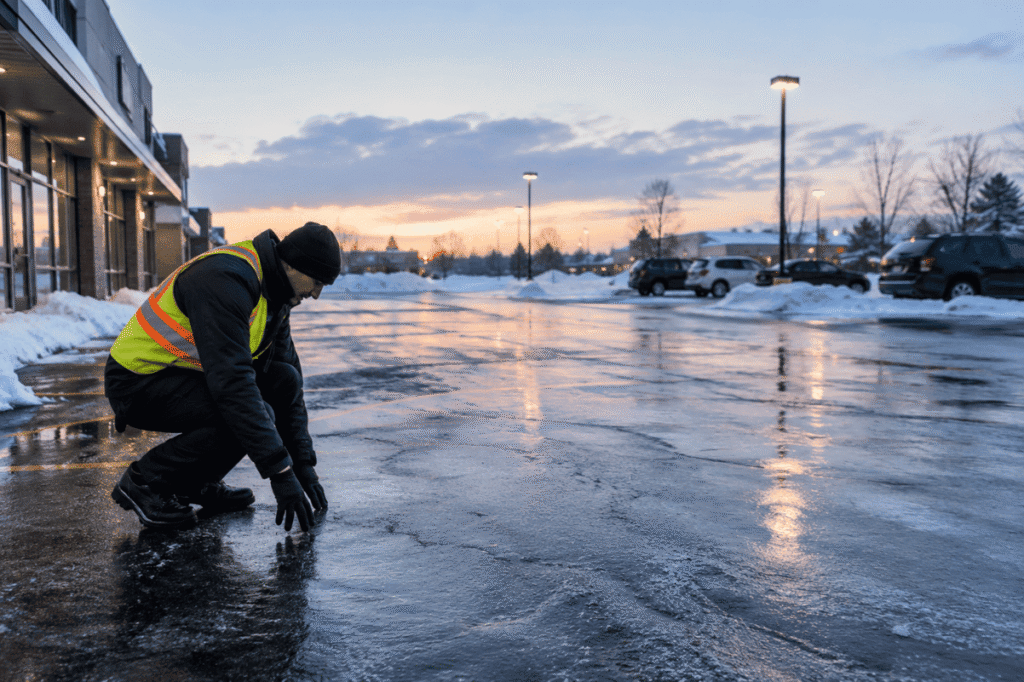
For property managers, winter maintenance involves more than clearing snow from a property. One of the most dangerous winter hazards can also be one of the hardest to see: black ice.At 6 a.m., overnight temperatures are often at their lowest. Employees, tenants, customers, and delivery drivers may soon be arriving, while thin layers of transparent ice can make walkways, entrances, parking areas, and driveways unexpectedly slippery.Knowing how black ice develops and where it commonly appears can help property managers prepare their properties before morning traffic begins.
What Is Black Ice?
Black ice is a thin layer of ice that forms when moisture freezes on a surface. Because the ice can be transparent, the pavement underneath remains visible.This makes black ice particularly dangerous. Unlike a thick layer of snow, it may not provide an obvious visual warning.Black ice can form after rain, freezing drizzle, melting snow, or moisture left on pavement freezes overnight.
Why Early Morning Can Be Risky
Overnight cooling can cause moisture on outdoor surfaces to freeze. A parking lot or walkway that appeared wet and safe during the evening may become icy several hours later.Limited morning light can also make transparent ice difficult to identify. Areas with poor lighting, shade, or dark pavement can be especially challenging to inspect.Freeze-thaw cycles create another concern. When temperatures rise during the day, snow and ice may melt. If temperatures drop again overnight, that moisture can refreeze into a thin layer of ice.
Where Black Ice Commonly Forms
Property managers should pay particular attention to areas where water collects, drains, or remains shaded.
- Parking lots: Low spots can collect rainwater or melting snow that freezes overnight.
- Sidewalks: Snow and moisture can melt during warmer periods and refreeze when temperatures fall.
- Building entrances: Water and slush around entrance areas can create slippery surfaces during freezing conditions.
- Ramps and slopes: Even a thin layer of ice can significantly reduce traction on sloped surfaces.
- Loading areas: Commercial loading zones can collect moisture from vehicles, snow, and melting ice.
- Areas near downspouts: Water draining from roofs can freeze on nearby walkways or pavement.
How to Spot Potential Black Ice
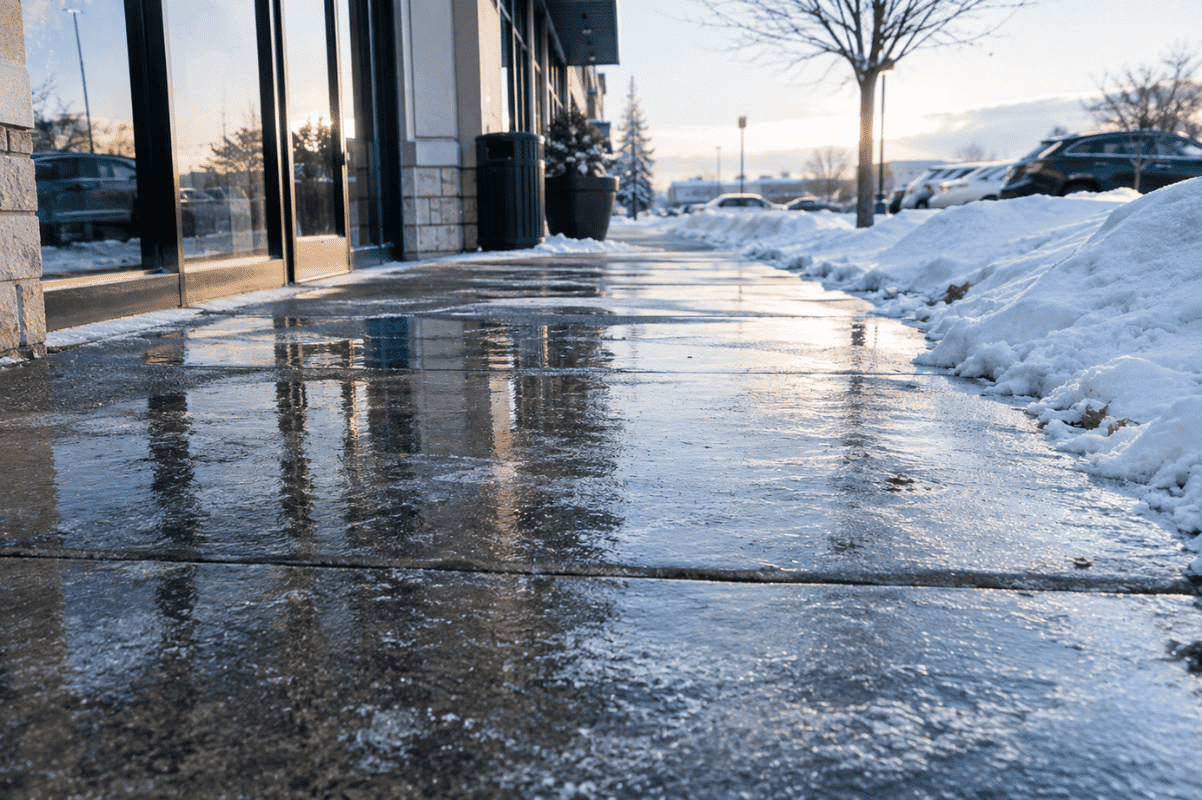
Black ice may be difficult to see, so property managers should learn to recognize conditions that increase the likelihood of its formation.
Look for:
- Unusually shiny or dark patches on pavement
- Wet-looking surfaces when temperatures are below freezing
- Refrozen puddles
- Areas where melting snow has flowed across pavement
- Shaded sidewalks and walkways
- Ice near drains and downspouts
- Locations that repeatedly become slippery after temperature changes
Maintenance staff should use suitable winter footwear when inspecting outdoor areas and take care when approaching suspicious surfaces.
Prevention Starts With Weather Monitoring
A proactive winter maintenance plan begins before hazardous ice appears.Property managers should monitor local weather forecasts for freezing rain, overnight temperature drops, and freeze-thaw conditions. Knowing when temperatures are expected to fall can help maintenance teams inspect vulnerable areas at the right time.For commercial properties, professional winter maintenance can also provide more consistent snow and ice monitoring. When evaluating Snow removal in Kitchener options, property managers should look beyond basic snow clearing and consider services that address icy surfaces, high-risk areas, and changing weather conditions.
Why Removing Snow Is Not Enough
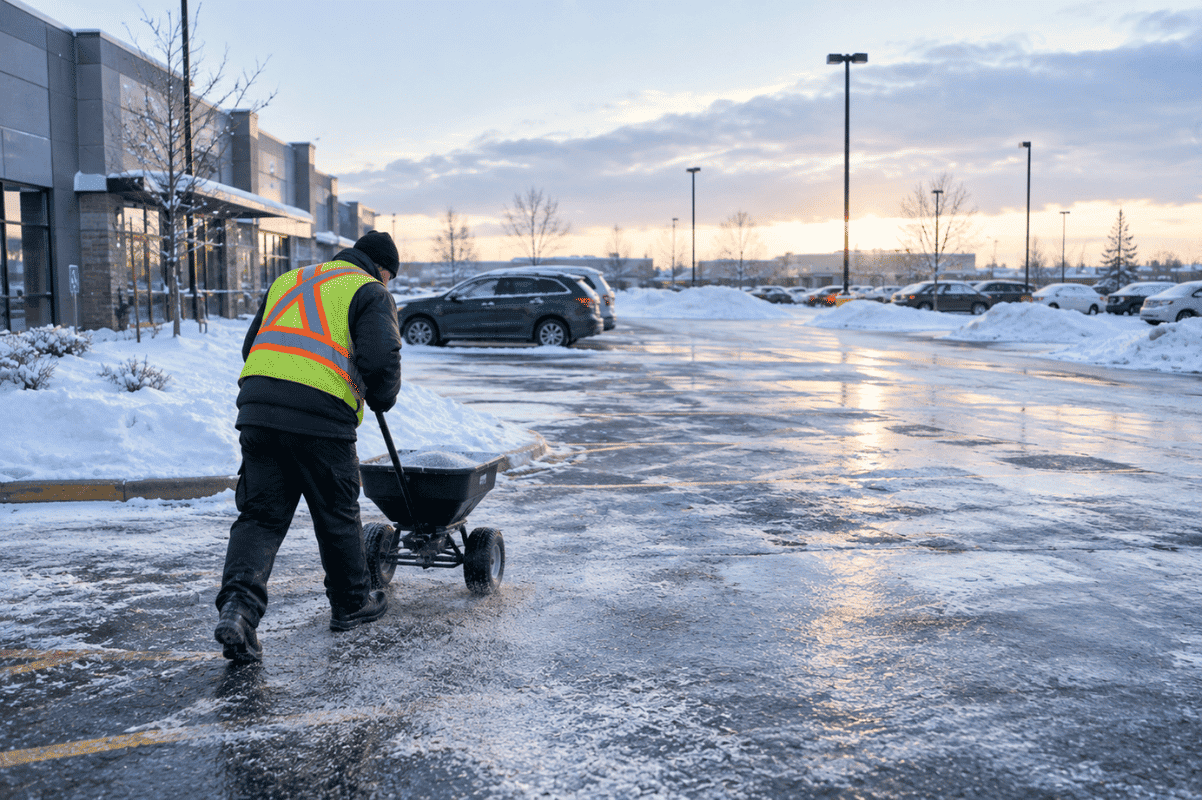
A property can look completely clear while still presenting a slip hazard.Snow removal addresses visible accumulation, but it does not automatically remove ice that forms underneath or after melting and refreezing.
A reliable winter maintenance plan should include:
- Regular property inspections
- Snow clearing when required
- Monitoring for black ice
- Appropriate ice control treatments
- Attention to entrances and pedestrian routes
- Inspection after freeze-thaw cycles
- Documentation of maintenance activities
This helps maintenance teams identify recurring problem areas and respond before conditions become more dangerous.
What to Check After an Overnight Freeze
After a significant temperature drop, property managers should inspect the property before heavy morning traffic begins.
- Check main entrances and frequently used walkways.
- Inspect ramps, stairs, and sloped areas.
- Look at parking lot pathways and pedestrian crossing areas.
- Check low spots where water may have collected.
- Inspect areas near downspouts and drainage points.
- Look for refrozen moisture around snowbanks.
- Apply an appropriate ice control or traction product where necessary.
- Recheck problem areas if temperatures continue to fluctuate.
Keeping records of inspections and treatments can also help property managers identify locations that repeatedly develop ice.
Create a Proactive Winter Safety Routine
Black ice is difficult to predict visually, but its risk can be reduced through preparation and regular monitoring.Property managers should think beyond snowfall and pay attention to temperature changes, drainage, shade, moisture, and high-traffic areas. Early inspections are particularly important when overnight freezing follows rain or melting snow.A parking lot or walkway that looks clear at 6 a.m. is not necessarily safe. Consistent winter inspections and appropriate ice control can help reduce slip hazards and create safer conditions for everyone using the propertyCanadian winters can change quickly, and black ice can develop without providing an obvious warning. Property managers who understand where and when it forms are better prepared to identify hazards before the morning rush.A practical winter strategy combines weather monitoring, timely snow clearing, regular inspections, and proactive ice control. This approach can help protect tenants, employees, customers, and visitors while keeping commercial properties safer throughout the winter season.
